

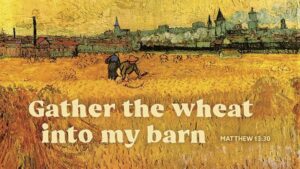
It is an age-old question: why is there evil in the world? In the parable of the wheat and the weeds Jesus suggests that both grow together until the harvest. Jesus interprets the parable for the disciples, announcing that at the end of time all evildoers will be thrown into the furnace of fire, while the righteous will shine like the sun. Matthew’s gospel knows little compromise: sheep or goats, wheat or weeds, good or evil. Finding the good news of God’s love can be a challenge in this book. However, in his letter to the church at Rome, Paul focuses on God as merciful judge. The exercise of judgment and mercy reflects God’s emphasis on justice over fairness. A fair God condemns those who do evil. A just God moves beyond fairness to justice, peace, and reconciliation. This Sunday, Vicar Ian preaches his final sermon at TLLC and reminds us that having both weeds and wheat within us, we need humbly place our hope in the promises of God so that we go forth from the Lord’s table to bear the fruit of the justice and mercy we have received.
image: Arles View from the Wheat Field (1888) by Vincent van Gogh. Photo by eburodunum. WikiArt. Public domain.